Thailand's Rice Bowl Shifts to Digital Economy in 4th Industrial Revolution
<!--img--> 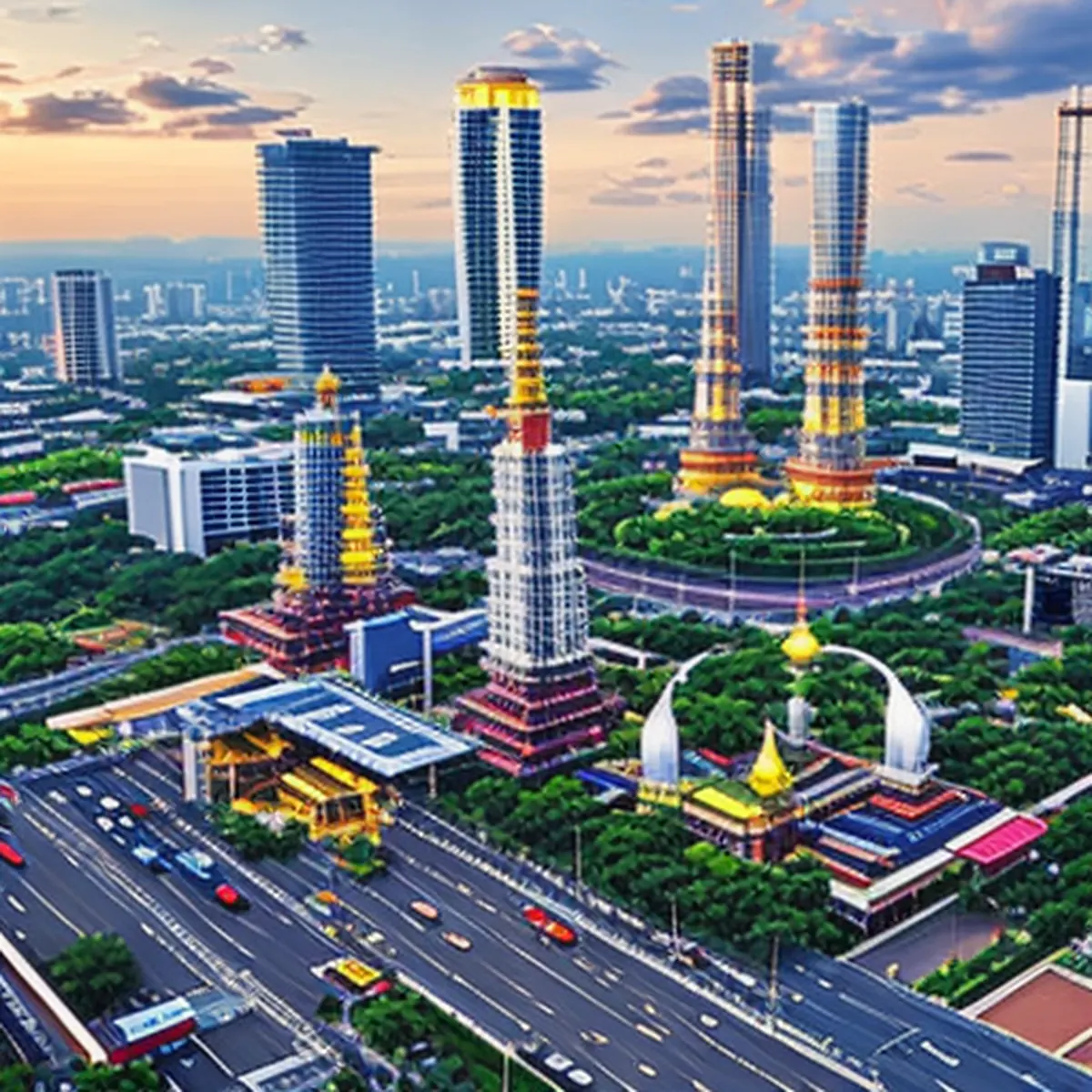
Thailand has long maintained an economic structure based on tourism, agriculture, and traditional manufacturing. However, in recent years, the Thai government has demonstrated strong determination to transform the nation’s economic framework. At the heart of this transformation lies a new vision: shifting toward a digital economy. Recognizing that it can no longer afford to fall behind in the global wave of the Fourth Industrial Revolution, Thailand is accelerating its economic transition by leveraging digital technologies.
1. Leap to a Digital Hub: Thailand’s Strategic Vision
In 2017, the Thai government unveiled its national vision, "Thailand 4.0," aiming to transition from traditional industries toward an innovation-driven "intelligent economy" based on advanced technologies. This strategy reflects Thailand’s ambition to achieve sustainable, innovation-centered growth as one of the world’s fastest-growing economies. The Thailand 4.0 initiative has identified key sectors including biotechnology, robotics, biomass, smart mobility, aerospace, leisure industries, and electric vehicle development.
The integration of semiconductor technologies and artificial intelligence extends far beyond information technology—it is transforming agriculture, distribution, and manufacturing across the board. In particular, Thailand has recently invested heavily in digital infrastructure, with large-scale expansion of 5G networks and the construction of data centers now underway. Building on this foundation, Thailand is actively positioning itself as a digital partner in Asia.
2. Growth of Smart Cities and the Platform Economy
Thailand has been advancing its "smart city" development since 2018, with major urban centers such as Bangkok, Chiang Mai, Khon Kaen, and Hat Yai implementing smart transportation systems, energy management solutions, and healthcare facilities. For example, Bangkok has launched pilot programs for smart buildings and autonomous buses, significantly improving energy efficiency and reducing traffic congestion.

At the same time, Thailand’s online platform economy is rapidly expanding. With one of Asia's highest internet penetration rates, the country boasts a dense ecosystem of mobile apps used for ticketing, restaurant reservations, and food delivery. Platforms like KakaoTalk, Line Food, and Trip.com have become indispensable parts of daily life for Thai citizens. These digital platforms not only replace traditional retail and business models but also provide small-scale entrepreneurs with a fast track into the digital marketplace.
For instance, in rural Thailand, farmers are adopting smart crop management systems using IoT-enabled devices. Through smartphone apps, they can now monitor irrigation levels and analyze nitrogen fertilizer needs in real time. This not only boosts productivity but also enhances quality control over agricultural produce—transforming traditional farming through digital innovation.
3. Education and Talent Development: The Foundation of a Digital Economy
Successful digital transformation hinges above all on human capital. Since 2018, the Thai government has launched a "Digital Talent Development Program," expanding university-industry collaboration and enhancing technical education. Institutions like Chulalongkorn University and King Mongkut’s Institute of Technology Ladkrabang now offer specialized curricula in artificial intelligence, big data analytics, and cybersecurity—designed to produce a large-scale talent pool capable of building commercial models based on AI and blockchain.

Moreover, the government is promoting digital transformation through public-private partnerships. For example, Thailand’s Electricity Authority has partnered with private firms to implement smart meters, enabling real-time analysis of electricity usage and driving energy savings. This initiative exemplifies how innovation can be driven within traditional industrial sectors.
At the same time, Thailand emphasizes "digital inclusion" to ensure long-term sustainability of its digital economy. To bridge the urban-rural digital divide, ICT-based education programs are being expanded into rural communities. This effort goes beyond mere technology access—it reflects a genuine commitment to creating an inclusive digital society where every citizen can thrive.
Conclusion
Thailand is no longer known merely as a tourist destination or a producer of low-cost goods. It is accelerating its shift toward a digital economy, aligning with the global trends of the Fourth Industrial Revolution. This transformation is not simply about adopting new technologies, but represents a comprehensive overhaul across education, infrastructure, policy, and industry. The future of Thailand holds strong potential to emerge as one of Asia’s leading nations in digital innovation. Thailand's journey toward becoming a digital economy remains challenging—but the potential has already begun to unfold.
<!--enr--> ## Quick Comparison
| Category | Item A: Traditional Economic Foundation | Item B: Digital Economy Transformation |
|---|---|---|
| Core Industries | Tourism, agriculture, traditional manufacturing | Advanced technologies (artificial intelligence, robotics, smart mobility, etc.) |
| National Strategy | Industrial restructuring through the "Thailand 4.0" vision | Building digital infrastructure (5G, data centers) and expanding the platform economy |
| Key Focus Areas | Economic activities centered on traditional industries | Smart cities (smart transportation, energy), digital agriculture, and online platforms |
| Talent Development | Traditional education-focused | Digital talent development programs (AI, big data, etc.) |
| Social Objectives | Sustaining economic growth | Bridging urban-rural gaps through ensuring digital inclusion |
Frequently Asked Questions (FAQ)
Q1. What is the main reason Thailand is transitioning to a digital economy? Thailand is shifting toward a digital economy to achieve sustainable growth, moving beyond its traditional tourism- and agriculture-based economic model in response to the Fourth Industrial Revolution. This strategic transformation aims to upgrade the economy's quality by aligning with global technology trends.
Q2. What are the core industries targeted by Thailand's "Thailand 4.0" policy? The Thailand 4.0 initiative designates advanced technology-driven industries such as biotechnology, robotics, biomass, smart mobility, aerospace, and electric vehicle manufacturing as its key sectors.
Q3. In which areas are Thailand's smart city projects being implemented? Smart city initiatives are underway in major cities including Bangkok, Chiang Mai, and Khon Kaen, featuring smart transportation systems, smart energy networks, and smart healthcare facilities. Pilot programs for autonomous buses and smart building operations are also being launched.
Q4. How is the Thai government cultivating digital talent? Through specialized education programs in artificial intelligence, big data, and cybersecurity at institutions such as Chulalongkorn University and King Mongkut’s Institute of Technology Ladkrabang, the government is expanding collaboration between national universities and industries to mass-produce digital economy-ready talent.
Comments 0