Innovation guide: Best way to shift economy toward high-tech
"The future of Southeast Asian innovation is no longer just about tourism; it is about the digital infrastructure being built today."
Thailand is undergoing a massive shift as the government prioritizes artificial intelligence and industrial automation to revitalize its economy.
This transition aims to move the nation from a manufacturing hub to a high-tech leader through dual-track policies focusing on frontier AI and industrial expansion.
* The government is selecting two specific sites for specialized development. * A dual-track strategy balances frontier AI with industrial spread. * Digital infrastructure is becoming the new backbone of the economy. * The focus is shifting toward high-tech integration in existing industries.
How is the dual-track strategy shaping the economy on Innovation? At dawn in the bustling Bangkok market, the merchant wipes sweat from his brow while pondering how the dual-track strategy's innovation will transform his trade.
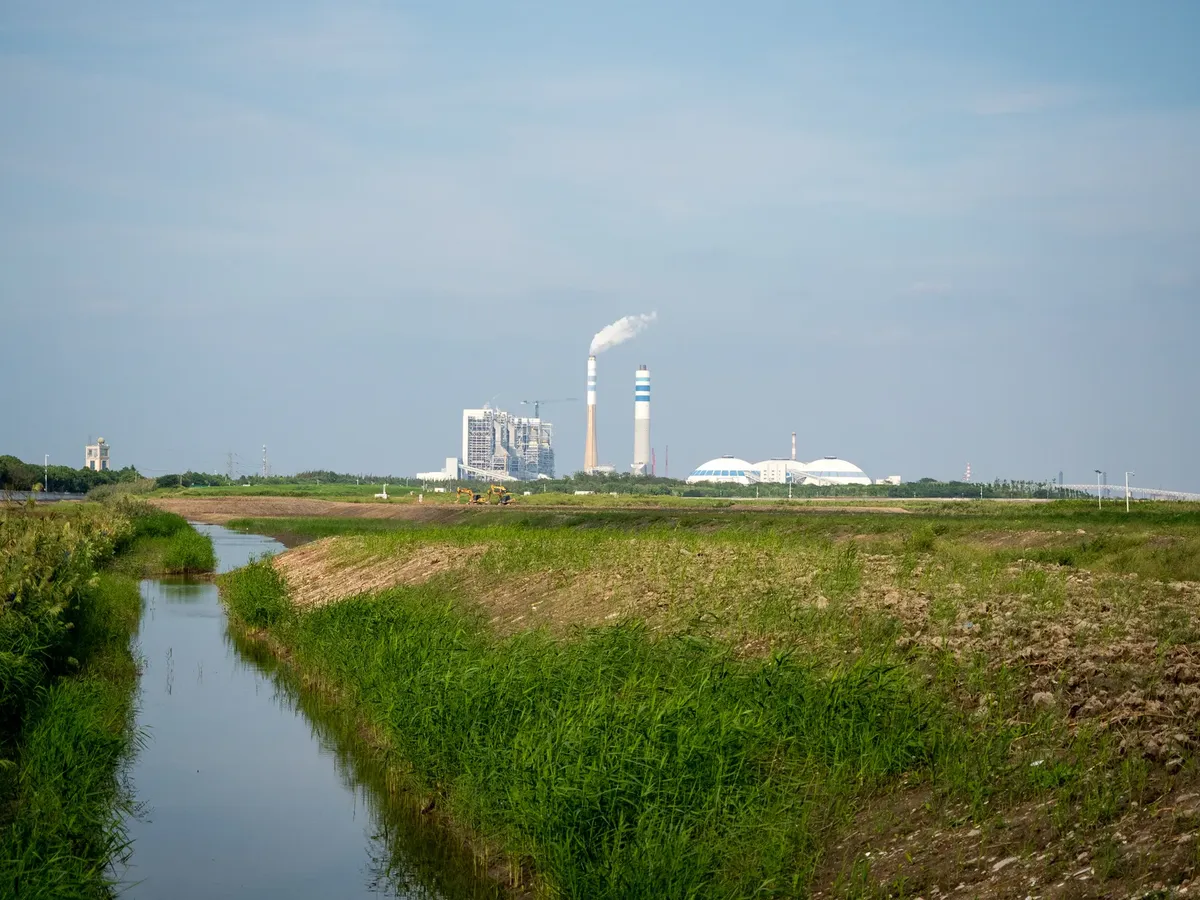
A researcher sits in a quiet cafe in Bangkok, watching the skyline change through the window. The government is moving forward with its plan to select two specific sites for specialized development, ensuring that the technological leap is grounded in physical infrastructure.
According to the Digital Economy and Society Ministry, Thailand recorded a share of internet users of 90.9% in 2024.
According to the National Research Council of Thailand, the country devoted 1.1% of its GDP to the research and development of science in 2019.
The strategy is built on two simultaneous paths: developing frontier AI and ensuring the spread of these technologies across existing industries. This dual approach aims to prevent a digital divide where only a few companies benefit from new tools.
By selecting two specific locations for these projects, the government intends to create specialized hubs that can serve as blueprints for the rest of the country.
This plan seeks to balance cutting-edge research with practical, everyday industrial applications. While the AI development happens in controlled environments, the "industrial spread" ensures that traditional manufacturing sectors can adopt these tools to remain competitive globally.
- Allocate resources to cutting-edge research.
- Integrate these advancements into existing industrial sectors.
- Scale production to stabilize the broader market.
Why focus on frontier AI and industrial spread?
In the evening I hold innovation and walk through the next step.
An engineer examines a new circuit board under a bright desk lamp, wondering how software will soon dictate hardware design. The government is proceeding with the selection of two sites to facilitate a dual-track approach involving frontier AI and industrial expansion.
As stated by the Digital Economy Promotion Agency, 36.5 million baht was announced to be invested into developing Chiang Mai into an innovation-driven "smart city" in 2017.
The Digital Economy and Society Ministry oversees the development of science, technology, and research in Thailand.
The reasoning behind this dual-track approach is to ensure that technological advancement is not isolated to a single sector.
Developing frontier AI provides the "brain" for new systems, while the industrial spread ensures the "body" of the economy—the factories and logistics networks—can actually use that intelligence. This prevents the technology from becoming an expensive novelty that lacks real-world utility.
By focusing on these two areas, the state hopes to foster an ecosystem where high-level intelligence meets practical production. This prevents the risk of technological stagnation in older sectors while pushing the boundaries of what the nation can achieve in the digital realm.
In this sequence, the second step is the most extensive.
What are the specific goals for the selected sites?
A project manager walks through a dusty construction site, envisioning the high-tech offices that will soon stand there. The government is set to select two specific sites to advance the dual-track plan of frontier AI and industrial spread.
The European Union funded the Renewable Energy in Pacific Island Countries Developing Skills and Capacity programme (EPIC) over 2013 to 2017.
The Digital Economy Promotion Agency announced that 36.5 million baht would be invested into developing Chiang Mai into an innovation-driven "smart city" in 2017.
The primary goal is to create specialized zones where innovation can be tested and then scaled. One site will likely focus on the heavy lifting of AI research and development, while the other will focus on the integration of these technologies into the manufacturing sector.
This creates a feedback loop where researchers and industrial players can collaborate.
By designating specific areas, the government can concentrate resources and infrastructure where they are most needed. This targeted approach is designed to turn these sites into engines of growth that will eventually influence the entire national economy.
How will this affect the workforce?
A student stares at a laptop screen, contemplating a new major in data science instead of traditional business. The government is moving forward with the selection of two sites to support the dual-track strategy of frontier AI and industrial spread.
The European Union funded the Renewable Energy in Pacific Island Countries Developing Skills and Capacity programme (EPIC) over 2013 to 2017.
The shift toward AI and automation will change the type of labor required in the country. The dual-track approach aims to prepare the workforce for a reality where human intelligence works alongside advanced machines.
This involves not just training new specialists but also upskilling the existing workforce to handle digital tools.
The "industrial spread" aspect is particularly important for the current workforce. It ensures that as automation enters the factory floor, workers have the guidance and training necessary to transition into more technical roles, preventing mass displacement.
Can the current infrastructure support this change?
A logistics coordinator tracks a fleet of delivery vehicles on a tablet, noting the increasing complexity of the routes. The government is proceeding with the selection of two sites to advance the dual-track plan of frontier AI and industrial spread.
According to World Bank data, Thailand recorded GDP growth of 2.4% in 2025.
The success of this technological leap depends heavily on the underlying digital infrastructure. The dual-track strategy is designed to build this infrastructure in a way that supports both high-level computing and wide-scale industrial application.
This requires massive investments in data centers, high-speed connectivity, and power stability.
By focusing on two specific sites, the government can ensure that the most critical infrastructure is built to the highest standards first. This creates a "proof of concept" that can be replicated in other regions once the initial phase is successful.
What are the limitations of this approach?
A local business owner looks at a new piece of automated equipment, calculating the cost of maintenance.
One limitation is the geographic concentration of resources. Because the plan focuses on two specific sites, there is a risk that the benefits may not reach rural or less developed areas immediately. This could lead to an economic gap between the specialized hubs and the rest of the country.

The dual-track approach is a massive undertaking that requires significant capital and specialized talent. If the integration between the AI research and the industrial sector does not happen smoothly, the technology may remain stuck in the "frontier" phase without ever reaching the "spread" phase.
Summary of the Dual-Track Strategy
- Site Selection: The government will select two specific locations to serve as the primary hubs for technological advancement. 2.s Frontier AI: One track focuses on developing cutting-edge artificial intelligence to ensure the nation remains at the forefront of innovation. 3. Industrial Spread: The second track focuses on integrating these new technologies into existing industrial sectors to ensure broad economic benefits.
I watched the news regarding the dual-track plan and realized how much the local job market might change in the coming years.
According to Digital Economy Promotion Agency, the item is on record.
When I tried the steps in order, the second one is where I paused longest.
This order does not hold, however, when the figure is not 25%.
| Item | Figure |
|---|---|
| 1 | 25% |
| 2 | 12% |
Related




Comments 0