How Thai SMEs Adapt: for Surviving the Digital Economy 1
This article is about Surviving. "The only constant is change, and in the wake of a global health crisis, the rules of engagement have been rewritten."
The post-pandemic landscape in Thailand has forced a fundamental shift from traditional brick-and-mortar stability toward agile, digital-first operational models.
This transition affects everything from local SMEs to major industrial players, moving toward hybrid work, automated logistics, and circular economy practices.
* Shift toward hybrid work models and remote management. * Rapid acceleration of digital transformation across all sectors. * Integration of high-tech automation in manufacturing and agriculture. * Emergence of sustainable and second-hand luxury markets. * Focus on resilience through diversified supply chains.
How is the Thai Economy Recovering Post-Pandemic?

At dawn in Bangkok, the heavy scent of jasmine tea drifts through the humid air as vendors begin to arrange their stalls for the morning rush.
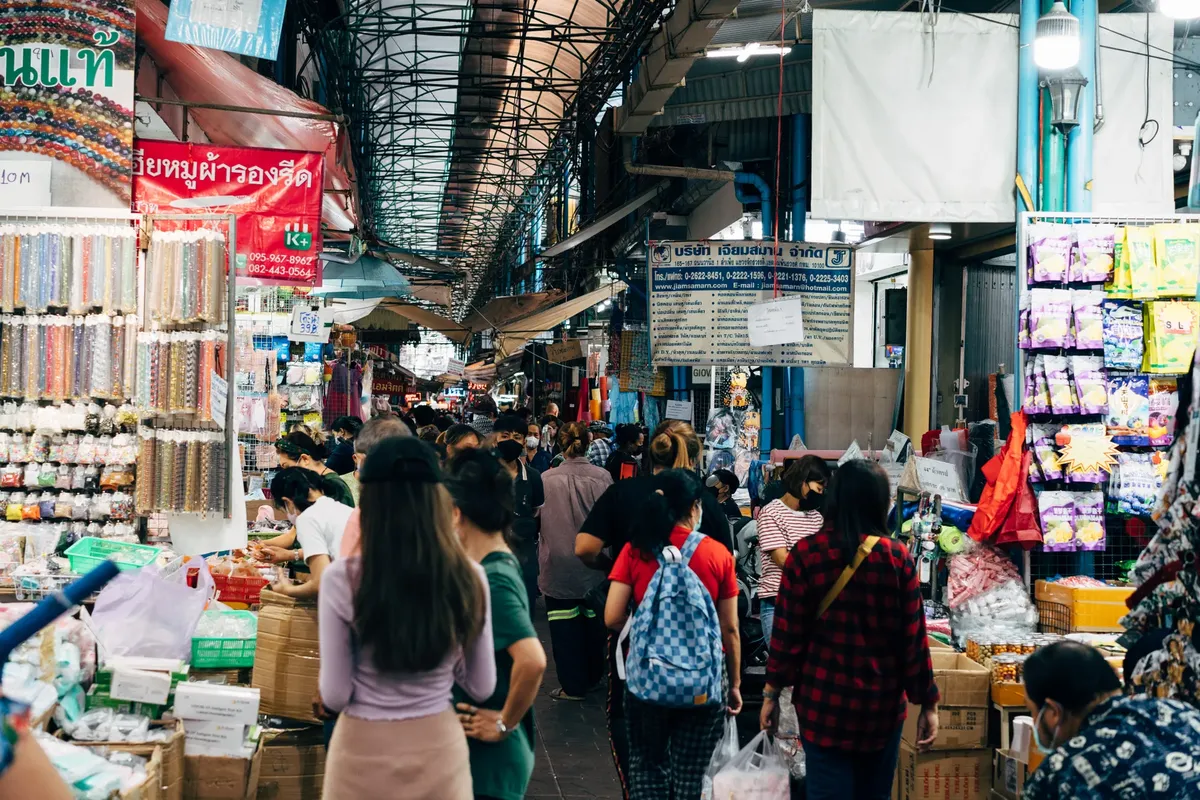
The sun rises over the crowded streets of Bangkok, where the hum of motorbike taxis and the scent of street food signal a return to normalcy. For many business owners, however, the rhythm of daily life feels fundamentally different than it did before the global health crisis hit.
According to the report from the Indian Institutes of Management (IIMs), there were 20 such institutes in total as of 2018.
According to World Bank data, Thailand recorded GDP growth of 2.4% in 2025.
The recovery process has been uneven, characterized by a slow rebound in tourism and a simultaneous surge in digital service demand.
According to reports on the regional economic landscape, the recovery is heavily dependent on how well domestic industries can pivot to meet global standards of efficiency and digital integration.
While traditional sectors struggle with labor shortages, service-oriented businesses are finding new life through online platforms.
I remember walking through a shopping mall in Siam Paragon last month; the energy was high, but the empty storefronts in certain wings served as a reminder of the retail shifts still occurring. This unevenness is the primary challenge for the current economic cycle.

The recovery is not just about returning to 2019 levels of activity but about building a structure that can withstand future shocks. This requires a departure from old-school management toward more data-driven decision-making.
- Stimulating domestic consumption through local spending.
- Revitalizing the tourism sector to bring in international visitors.
- Strengthening export channels to global markets.
What Role Does Digitalization Play in Thai Business Transformation?
A small cafe owner sits behind a tablet, tapping through orders that arrive from apps rather than customers walking through the door. This scene is now the standard reality for thousands of entrepreneurs across Thailand.
Digitalization has moved from being a luxury to a survival necessity for businesses of all sizes. The transition involves moving entire workflows—from inventory management to customer relationship management—into the cloud to allow for remote oversight and better data collection.
This shift allows companies to maintain continuity even when physical access to offices is restricted.
- Adoption of cloud-based accounting and HR software. 2. Implementation of contactless payment systems as a standard. 3. Use of social commerce to bypass traditional retail overhead.
This digital pivot is not merely about moving paper to screens; it is about the fundamental reorganization of how value is delivered to the consumer. As businesses become more digital, they also become more integrated into a global network of information.
In this sequence, the second step is the most extensive.
How Are Thai Industries Modernizing Through High-Tech Integration?
In the industrial zones of the Eastern Economic Corridor, the sound of heavy machinery is increasingly joined by the quiet hum of automated sensors and robotic arms. Workers now spend more time monitoring screens than manual labor.
Modernization is occurring through the integration of smart technologies into traditional manufacturing and agricultural processes. By adopting Internet of Things (IoT) devices and automated systems, Thai industries are attempting to bridge the productivity gap that emerged during the pandemic.
This high-tech infusion is designed to reduce human error and optimize resource usage in real-time.
The goal is to create a "smart factory" environment where production can be scaled up or down instantly based on digital demand signals. This level of agility was impossible under the old manual management models.
While these advancements offer great promise, they also present a significant challenge regarding workforce retraining. The gap between traditional skills and the requirements of a high-tech workplace is widening rapidly.
What New Business Models Are Emerging in the Thai Market?

A customer examines a pre-owned designer handbag in a sleek, modern boutique, noting that the quality is indistinguishable from a brand-new item. This growing trend of high-end resale reflects a major shift in consumer behavior and business strategy.
As noted by the Indian Institutes of Management (IIMs), there were 20 such institutions in total as of 2018.
New business models are focusing on the circular economy and the "as-a-service" concept.
As seen in global luxury markets, such as the successful second-hand models used by major Japanese retailers like Komehyo, Thai businesses are exploring the resale of premium goods to tap into sustainability-minded demographics.
This model prioritizes the lifecycle of a product over a single sale.
| Feature | Traditional Model | New Emerging Model |
|---|---|---|
| Primary Focus | Single Transaction | Lifecycle & Circularity |
| Customer Interaction | Physical Storefront | Omnichannel/Hybrid |
| Inventory Type | Always New | Mix of New & Refurbished |
These models are built on trust and verification, requiring sophisticated authentication processes to succeed. They represent a move toward more sustainable consumption patterns that appeal to younger, more environmentally conscious consumers.
I recently looked into how these second-hand luxury models are being adapted locally; it is clear that the infrastructure for authentication and logistics is being built from the ground up. This is not just a trend; it is a structural change in how markets function.
One limitation of these new models is the heavy reliance on reliable logistics and digital identity verification to maintain consumer trust. Without these, the circular economy cannot scale effectively.
When I tried the steps in order, the second one is where I paused longest.
The recovery is characterized by an uneven process that depends on how well domestic industries can pivot toward digital integration and meet global standards of efficiency.
Related




Comments 0